123456789101112131415161718192021222324252627282930313233343536373839404142434445464748495051525354555657585960616263646566676869707172737475767778798081828384858687888990919293949596979899100101102103104105106107108109110111112113114115116117118119120121122123124125126127128129130131132133134135136137138139140141
#include <bits/stdc++.h>
using namespace std;

// Definition of doubly linked list
struct ListNode
{
    int val;
    ListNode *next;
    ListNode *prev;
    ListNode()
    {
        val = 0;
        next = NULL;
        prev = NULL;
    }
    ListNode(int data1)
    {
        val = data1;
        next = NULL;
        prev = NULL;
    }
    ListNode(int data1, ListNode *next1, ListNode *prev1)
    {
        val = data1;
        next = next1;
        prev = prev1;
    }
};

// Solution class
class Solution {
public:
    // Function to remove the Kth element
    ListNode* deleteKthElement(ListNode* head, int k) {
        // If the list is empty, return nullptr
        if (head == nullptr)
            return nullptr;

        int count = 0;
        ListNode* kNode = head;

        // Traverse the list
        while (kNode != nullptr) {
            count++;
            if (count == k) break;
            kNode = kNode->next;
        }

        // If k is larger
        if (kNode == nullptr) return head;

        // Update the pointers
        ListNode* prev = kNode->prev;
        ListNode* front = kNode->next;

        // If node to be deleted is only node in list
        if (prev == nullptr && front == nullptr) {
            delete kNode;
            return nullptr;
        }

        // If node to be deleted is head of list
        else if (prev == nullptr) {
            head = front;
            front->prev = nullptr;
        }

        // If node to be deleted is tail of list
        else if (front == nullptr) {
            prev->next = nullptr;
        }

        // If node to be deleted is in middle of list
        else {
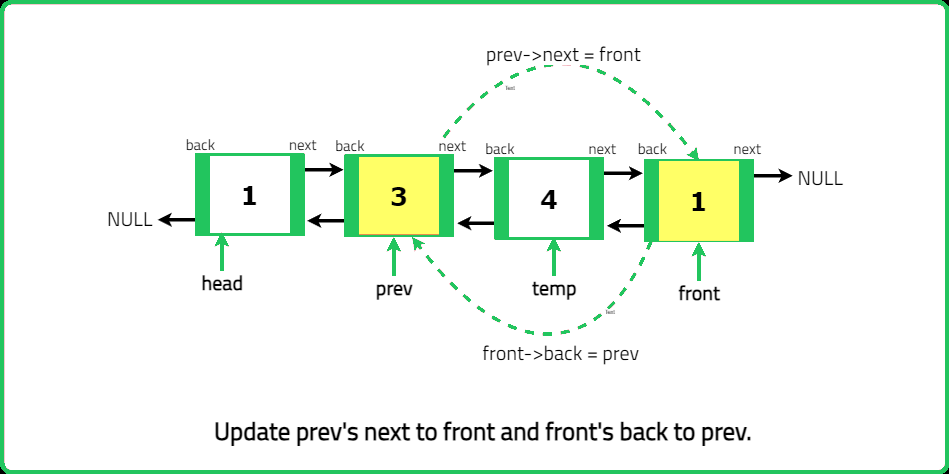
            prev->next = front;
            front->prev = prev;
        }

        // Free memory of the deleted node
        delete kNode;

        // Return modified list head
        return head;
    }
};

// Helper Function to convert an array to a doubly linked list
ListNode* arrayToLinkedList(vector<int> &nums) {
    // If array is empty, return nullptr
    if (nums.empty()) return nullptr;

    // Create head node with first element of the array
    ListNode* head = new ListNode(nums[0]);
    // Initialize 'prev' to the head node
    ListNode* prev = head;

    for (int i=1; i < nums.size(); i++) {
        // Create a new node
        ListNode* temp = new ListNode(nums[i], nullptr, prev);
        // Update 'next' pointer
        prev->next = temp;
        // Move 'prev' to newly created node
        prev = temp;
    }

    // Return head
    return head;
}

// Helper Function to print the linked list
void printLL(ListNode* head) {
    while (head != NULL) {
        cout << head->val << " ";
        head = head->next;
    }
    cout << endl;
}

int main() {
    vector<int> nums = {1, 2, 3, 4, 5};
    int k = 2;

    // Creating the doubly linked list from given array
    ListNode* head = arrayToLinkedList(nums);

    // Print the Original list
    cout << "Original List: ";
    printLL(head);

    // Create an instance of Solution class
    Solution sol;

    // Function call to delete the kth Node of the doubly linked list
    head = sol.deleteKthElement(head, k);

    // Print the Modified list
    cout << "Modified list: ";
    printLL(head);

    return 0;
}
123456789101112131415161718192021222324252627282930313233343536373839404142434445464748495051525354555657585960616263646566676869707172737475767778798081828384858687888990919293949596979899100101102103104105106107108109110111112113114115116117118119120121122123124125126127128129130131132133134
// Definition of doubly linked list
class ListNode {
    int val;
    ListNode next;
    ListNode prev;

    ListNode() {
        val = 0;
        next = null;
        prev = null;
    }

    ListNode(int data1) {
        val = data1;
        next = null;
        prev = null;
    }

    ListNode(int data1, ListNode next1, ListNode prev1) {
        val = data1;
        next = next1;
        prev = prev1;
    }
}

// Solution class
class Solution {
    // Function to remove the Kth element
    public ListNode deleteKthElement(ListNode head, int k) {
        // If the list is empty, return null
        if (head == null)
            return null;

        int count = 0;
        ListNode kNode = head;

        // Traverse the list
        while (kNode != null) {
            count++;
            if (count == k) break;
            kNode = kNode.next;
        }

        // If k is larger than the list size
        if (kNode == null) return head;

        // Update the pointers
        ListNode prev = kNode.prev;
        ListNode front = kNode.next;

        // If node to be deleted is the only node in the list
        if (prev == null && front == null) {
            return null;
        }

        // If node to be deleted is head of the list
        else if (prev == null) {
            head = front;
            front.prev = null;
        }

        // If node to be deleted is tail of the list
        else if (front == null) {
            prev.next = null;
        }

        // If node to be deleted is in the middle of the list
        else {
            prev.next = front;
            front.prev = prev;
        }

        // Return modified list head
        return head;
    }
}

// Main class
class Main {
    // Helper Function to convert an array to a doubly linked list
    private static ListNode arrayToLinkedList(int[] nums) {
        // If array is empty, return null
        if (nums.length == 0) return null;

        // Create head node with first element of the array
        ListNode head = new ListNode(nums[0]);
        // Initialize 'prev' to the head node
        ListNode prev = head;

        for (int i = 1; i < nums.length; i++) {
            // Create a new node
            ListNode temp = new ListNode(nums[i], null, prev);
            // Update 'next' pointer
            prev.next = temp;
            // Move 'prev' to newly created node
            prev = temp;
        }

        // Return head
        return head;
    }

    // Helper Function to print the linked list
    private static void printLL(ListNode head) {
        while (head != null) {
            System.out.print(head.val + " ");
            head = head.next;
        }
        System.out.println();
    }

    // main method
    public static void main(String[] args) {
        int[] nums = {1, 2, 3, 4, 5};
        int k = 2;

        // Creating the doubly linked list from given array
        ListNode head = arrayToLinkedList(nums);

        // Print the Original list
        System.out.print("Original List: ");
        printLL(head);

        // Create an instance of Solution class
        Solution sol = new Solution();

        // Function call to delete the kth Node of the doubly linked list
        head = sol.deleteKthElement(head, k);

        // Print the Modified list
        System.out.print("Modified list: ");
        printLL(head);
    }
}
123456789101112131415161718192021222324252627282930313233343536373839404142434445464748495051525354555657585960616263646566676869707172737475767778798081828384858687888990919293949596979899100101102103
# Definition of doubly linked list
class ListNode:
    def __init__(self, data1=0, next1=None, prev1=None):
        self.val = data1
        self.next = next1
        self.prev = prev1

# Solution class
class Solution:
    # Function to remove the Kth element
    def deleteKthElement(self, head, k):
        # If the list is empty, return None
        if head is None:
            return None

        count = 0
        kNode = head

        # Traverse the list
        while kNode is not None:
            count += 1
            if count == k:
                break
            kNode = kNode.next

        # If k is larger than the list size
        if kNode is None:
            return head

        # Update the pointers
        prev = kNode.prev
        front = kNode.next

        # If node to be deleted is the only node in the list
        if prev is None and front is None:
            return None

        # If node to be deleted is head of the list
        elif prev is None:
            head = front
            front.prev = None

        # If node to be deleted is tail of the list
        elif front is None:
            prev.next = None

        # If node to be deleted is in the middle of the list
        else:
            prev.next = front
            front.prev = prev

        # Return modified list head
        return head

# Helper Function to convert an array to a doubly linked list
def arrayToLinkedList(nums):
    # If array is empty, return None
    if not nums:
        return None

    # Create head node with first element of the array
    head = ListNode(nums[0])
    # Initialize 'prev' to the head node
    prev = head

    for i in range(1, len(nums)):
        # Create a new node
        temp = ListNode(nums[i], None, prev)
        # Update 'next' pointer
        prev.next = temp
        # Move 'prev' to newly created node
        prev = temp

    # Return head
    return head

# Helper Function to print the linked list
def printLL(head):
    while head is not None:
        print(head.val, end=" ")
        head = head.next
    print()

if __name__ == "__main__":
    nums = [1, 2, 3, 4, 5]
    k = 2

    # Creating the doubly linked list from given array
    head = arrayToLinkedList(nums)

    # Print the Original list
    print("Original List: ", end="")
    printLL(head)

    # Create an instance of Solution class
    sol = Solution()

    # Function call to delete the kth Node of the doubly linked list
    head = sol.deleteKthElement(head, k)

    # Print the Modified list
    print("Modified list: ", end="")
    printLL(head)
123456789101112131415161718192021222324252627282930313233343536373839404142434445464748495051525354555657585960616263646566676869707172737475767778798081828384858687888990919293949596979899100101102103104105106107108109110111112113114115116
// Definition of doubly linked list
class ListNode {
    constructor(data1 = 0, next1 = null, prev1 = null) {
        this.val = data1;
        this.next = next1;
        this.prev = prev1;
    }
}

// Solution class
class Solution {
    // Function to remove the Kth element
    deleteKthElement(head, k) {
        // If the list is empty, return null
        if (head === null)
            return null;

        let count = 0;
        let kNode = head;

        // Traverse the list
        while (kNode !== null) {
            count++;
            if (count === k) break;
            kNode = kNode.next;
        }

        // If k is larger than the list size
        if (kNode === null) return head;

        // Update the pointers
        let prev = kNode.prev;
        let front = kNode.next;

        // If node to be deleted is the only node in the list
        if (prev === null && front === null) {
            return null;
        }

        // If node to be deleted is head of the list
        else if (prev === null) {
            head = front;
            front.prev = null;
        }

        // If node to be deleted is tail of the list
        else if (front === null) {
            prev.next = null;
        }

        // If node to be deleted is in the middle of the list
        else {
            prev.next = front;
            front.prev = prev;
        }

        // Return modified list head
        return head;
    }
}

// Helper Function to convert an array to a doubly linked list
function arrayToLinkedList(nums) {
    // If array is empty, return null
    if (nums.length === 0) return null;

    // Create head node with first element of the array
    let head = new ListNode(nums[0]);
    // Initialize 'prev' to the head node
    let prev = head;

    for (let i = 1; i < nums.length; i++) {
        // Create a new node
        let temp = new ListNode(nums[i], null, prev);
        // Update 'next' pointer
        prev.next = temp;
        // Move 'prev' to newly created node
        prev = temp;
    }

    // Return head
    return head;
}

// Helper Function to print the linked list
function printLL(head) {
    while (head !== null) {
        process.stdout.write(head.val + " ");
        head = head.next;
    }
    console.log();
}

const main = () => {
    const nums = [1, 2, 3, 4, 5];
    const k = 2;

    // Creating the doubly linked list from given array
    let head = arrayToLinkedList(nums);

    // Print the Original list
    console.log("Original List: ");
    printLL(head);

    // Create an instance of Solution class
    let sol = new Solution();

    // Function call to delete the kth Node of the doubly linked list
    head = sol.deleteKthElement(head, k);

    // Print the Modified list
    console.log("Modified list: ");
    printLL(head);
}

main();