1234567891011121314151617181920212223242526272829303132333435363738394041424344
#include<bits/stdc++.h>
using namespace std;


class Solution {
public:
    // Method to find the longest common prefix in a vector of strings
    string longestCommonPrefix(vector<string>& str) {
        // Edge case: empty vector
        if (str.empty()) return "";

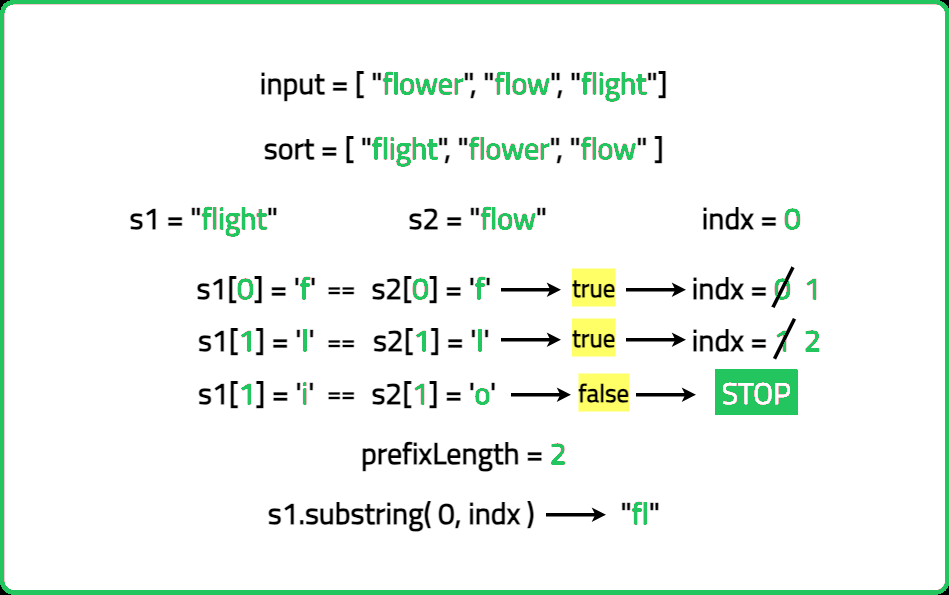
        // Sort the vector to get the lexicographically smallest and largest strings
        sort(str.begin(), str.end());
        // First string (smallest in sorted order)
        string first = str[0];
        // Last string (largest in sorted order)
        string last = str[str.size() - 1];

        // Compare characters of the first and last strings
        int minLength = min(first.size(), last.size());
        string ans = "";
        for (int i = 0; i < minLength; i++) {
            // If characters don't match, return the current prefix
            if (first[i] != last[i]) {
                return ans;
            }
            // Append the matching character to the result
            ans += first[i];
        }

        // Return the longest common prefix found
        return ans;
    }
};

// Main function to test the longestCommonPrefix method
int main() {
    Solution solution;
    vector<string> input = {"flower", "flow", "flight"};
    string result = solution.longestCommonPrefix(input);
    cout << "Longest Common Prefix: " << result << endl; // Output: "fl"
    return 0;
}
1234567891011121314151617181920212223242526272829303132333435363738
import java.util.Arrays;

class Solution {
    // Method to find the longest common prefix in an array of strings
    public String longestCommonPrefix(String[] v) {
        // Use StringBuilder to build the result
        StringBuilder ans = new StringBuilder();

        // Sort the array to get the lexicographically smallest and largest strings
        Arrays.sort(v);
        // First string (smallest in sorted order)
        String first = v[0];
         // Last string (largest in sorted order)
        String last = v[v.length - 1];

        // Compare characters of the first and last strings
        for (int i = 0; i < Math.min(first.length(), last.length()); i++) {
            // If characters don't match, return the current prefix
            if (first.charAt(i) != last.charAt(i)) {
                return ans.toString();
            }
            // Append the matching character to the result
            ans.append(first.charAt(i));
        }

        // Return the longest common prefix found
        return ans.toString();
    }

    // Main method to test the longestCommonPrefix method
    public static void main(String[] args) {
        Solution solution = new Solution();
        String[] input = {"flower", "flow", "flight"};
        String result = solution.longestCommonPrefix(input);
        System.out.println("Longest Common Prefix: " + result); // Output: "fl"
    }
}
123456789101112131415161718192021222324252627282930313233
class Solution:
    # Method to find the longest common prefix in a list of strings
    def longestCommonPrefix(self, strs):
        # Edge case: empty list
        if not strs:
            return ""

        # Sort the list to get the lexicographically smallest and largest strings
        strs.sort()
        # First string (smallest in sorted order)
        first = strs[0]
        # Last string (largest in sorted order)
        last = strs[-1]

        # Compare characters of the first and last strings
        ans = []
        for i in range(min(len(first), len(last))):
            # If characters don't match, return the current prefix
            if first[i] != last[i]:
                return ''.join(ans)
            # Append the matching character to the result
            ans.append(first[i])

        # Return the longest common prefix found
        return ''.join(ans)

# Test the longestCommonPrefix method
if __name__ == "__main__":
    solution = Solution()
    input_strs = ["flower", "flow", "flight"]
    result = solution.longestCommonPrefix(input_strs)
    print("Longest Common Prefix:", result)  # Output: "fl"
123456789101112131415161718192021222324252627282930313233343536
class Solution {
    // Method to find the longest common prefix in an array of strings
    longestCommonPrefix(strs) {
        // Edge case: empty array
        if (strs.length === 0) return "";

        // Sort the array to get the lexicographically smallest and largest strings
        strs.sort();
        // First string (smallest in sorted order)
        const first = strs[0];
        // Last string (largest in sorted order)
        const last = strs[strs.length - 1];

        let commonPrefix = "";

        // Compare characters of the first and last strings
        for (let i = 0; i < Math.min(first.length, last.length); i++) {
            // If characters don't match, return the current prefix
            if (first[i] !== last[i]) {
                return commonPrefix;
            }
            // Append the matching character to the result
            commonPrefix += first[i];
        }

        // Return the longest common prefix found
        return commonPrefix;
    }
}

// Test the longestCommonPrefix method
const solution = new Solution();
const inputStrs = ["flower", "flow", "flight"];
const result = solution.longestCommonPrefix(inputStrs);
console.log("Longest Common Prefix:", result); // Output: "fl"