Given an array of nums of n integers. Every integer in the array appears twice except one integer. Find the number that appeared once in the array.
Input : nums = [1, 2, 2, 4, 3, 1, 4]
Output : 3
Explanation : The integer 3 has appeared only once.
Input : nums = [5]
Output : 5
Explanation : The integer 5 has appeared only once.
Input : nums = [1, 3, 10, 3, 5, 1, 5]
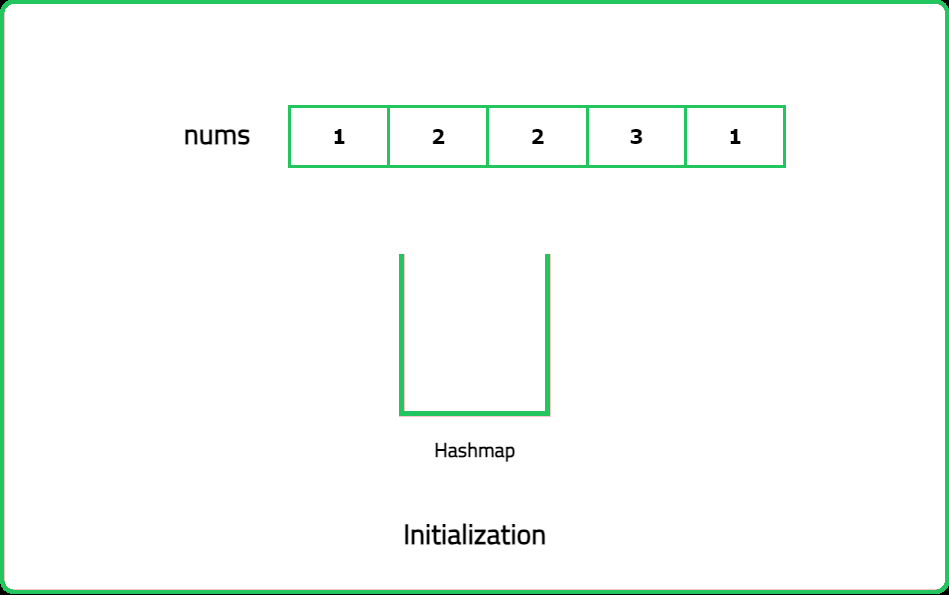
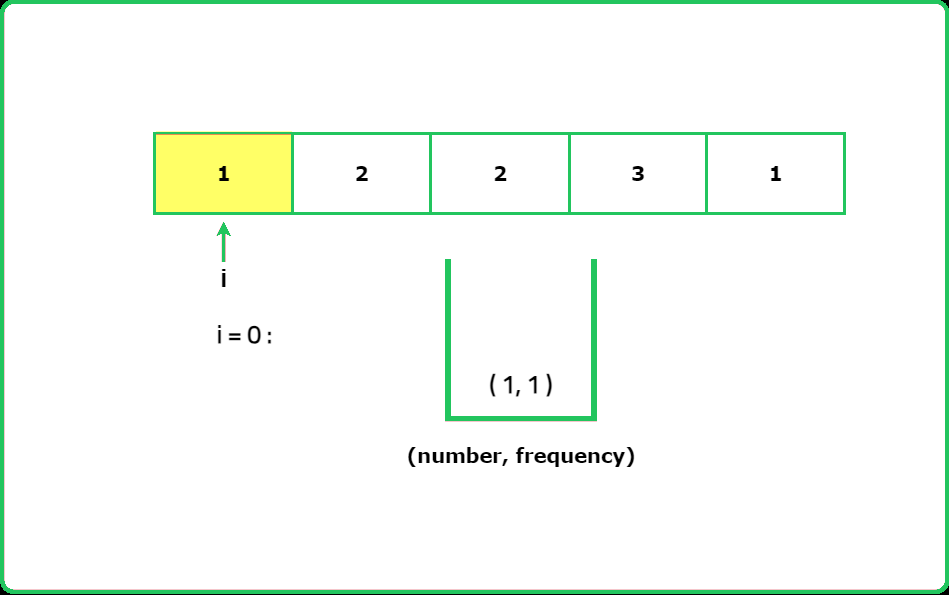
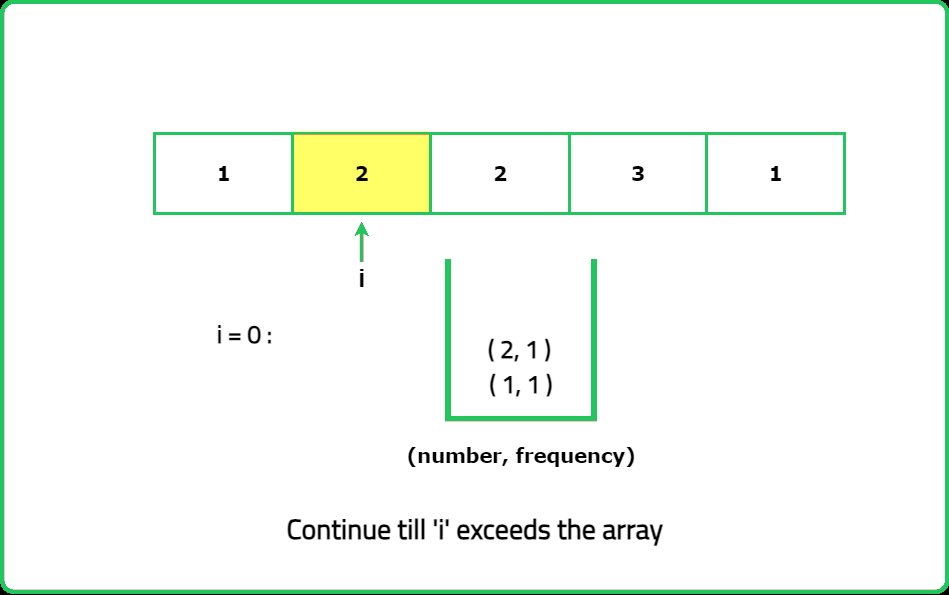
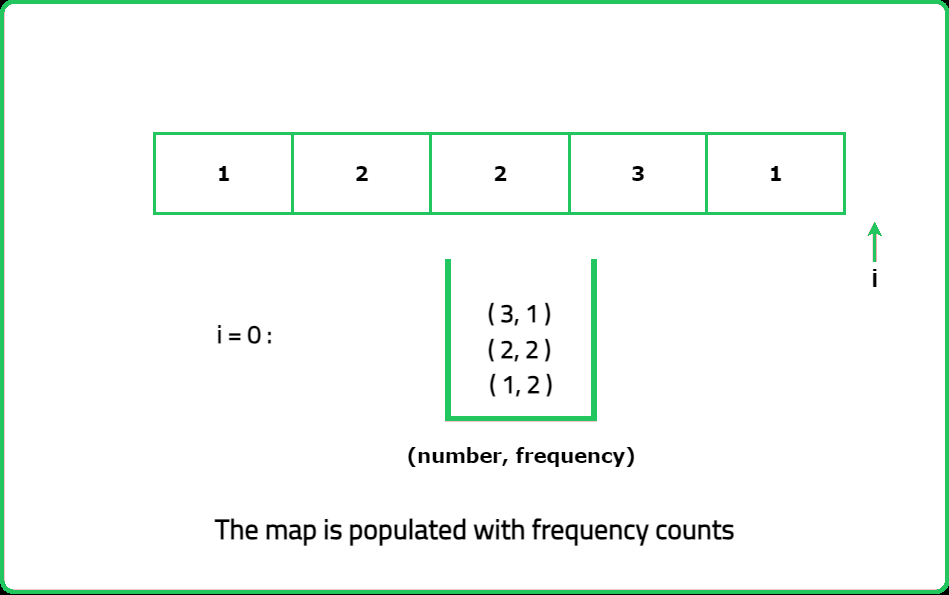
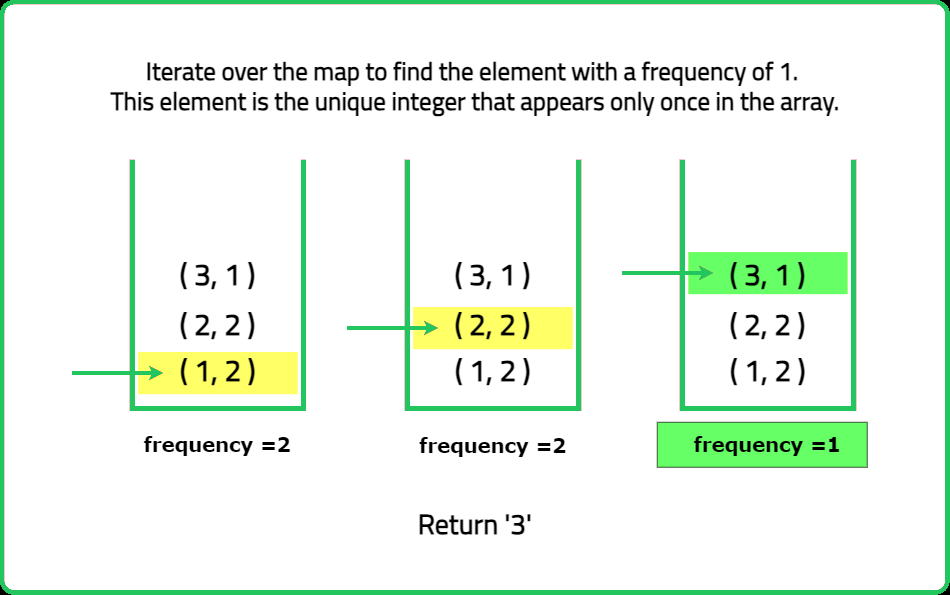
The brute force way to solve this will be to utilize a frequency counting approach. By keeping track of the frequency of each element in the array, the element that appears only once can be easily identified.


#include <bits/stdc++.h>
using namespace std;
class Solution {
public:
/* Function to get the single
number in the given array */
int singleNumber(vector<int>& nums){
/* Map to store the elements
and their frequencies */
unordered_map <int, int> mpp;
// Iterate on the array
for(int i=0; i < nums.size(); i++) {
mpp[nums[i]]++; //Update the map
}
//Iterate on the map
for(auto it : mpp) {
// If frequency is 1
if(it.second == 1) {
// Return the element
return it.first;
}
}
/* Return -1, if there is no
number having frequency 1 */
return -1;
}
};
int main() {
vector<int> nums = {1, 2, 2, 4, 3, 1, 4};
/* Creating an instance of
Solution class */
Solution sol;
/* Function call to get the single
number in the given array */
int ans = sol.singleNumber(nums);
cout << "The single number in given array is: " << ans;
return 0;
}
import java.util.HashMap;
class Solution {
/* Function to get the single
number in the given array */
public int singleNumber(int[] nums) {
/* Map to store the elements
and their frequencies */
HashMap<Integer, Integer> mpp = new HashMap<>();
// Iterate on the array
for (int num : nums) {
mpp.put(num, mpp.getOrDefault(num, 0) + 1); //Update the map
}
//Iterate on the map
for (int key : mpp.keySet()) {
// If frequency is 1
if (mpp.get(key) == 1) {
// Return the element
return key;
}
}
/* Return -1, if there is no
number having frequency 1 */
return -1;
}
public static void main(String[] args) {
int[] nums = {1, 2, 2, 4, 3, 1, 4};
/* Creating an instance of
Solution class */
Solution sol = new Solution();
/* Function call to get the single
number in the given array */
int ans = sol.singleNumber(nums);
System.out.println("The single number in given array is: " + ans);
}
}
class Solution:
# Function to get the single
# number in the given array
def singleNumber(self, nums):
# Map to store the elements
# and their frequencies
mpp = {}
# Iterate on the array
for num in nums:
if num in mpp:
mpp[num] += 1 #Update the map
else:
mpp[num] = 1 #Update the map
# Iterate on the map
for key, value in mpp.items():
# If frequency is 1
if value == 1:
# Return the element
return key
# Return -1, if there is no
# number having frequency 1
return -1
# Example usage
nums = [1, 2, 2, 4, 3, 1, 4]
# Creating an instance of
# Solution class
sol = Solution()
# Function call to get the single
# number in the given array
ans = sol.singleNumber(nums)
print("The single number in given array is:", ans)
class Solution {
/* Function to get the single
number in the given array */
singleNumber(nums) {
/* Map to store the elements
and their frequencies */
let mpp = new Map();
// Iterate on the array
nums.forEach(num => {
mpp.set(num, (mpp.get(num) || 0) + 1); //Update the map
});
// Iterate on the map
for (let [key, value] of mpp) {
// If frequency is 1
if (value === 1) {
// Return the element
return key;
}
}
/* Return -1, if there is no
number having frequency 1 */
return -1;
}
}
// Example usage
let nums = [1, 2, 2, 4, 3, 1, 4];
/* Creating an instance of
Solution class */
let sol = new Solution();
/* Function call to get the single
number in the given array */
let ans = sol.singleNumber(nums);
console.log("The single number in given array is:", ans);
Time Complexity: O(N) (where N is the size of the array) –
Space Complexity: O(N) – Using a hashmap data structure and in the worst-case (when all elements in the array are unique), it will store N key-value pairs.
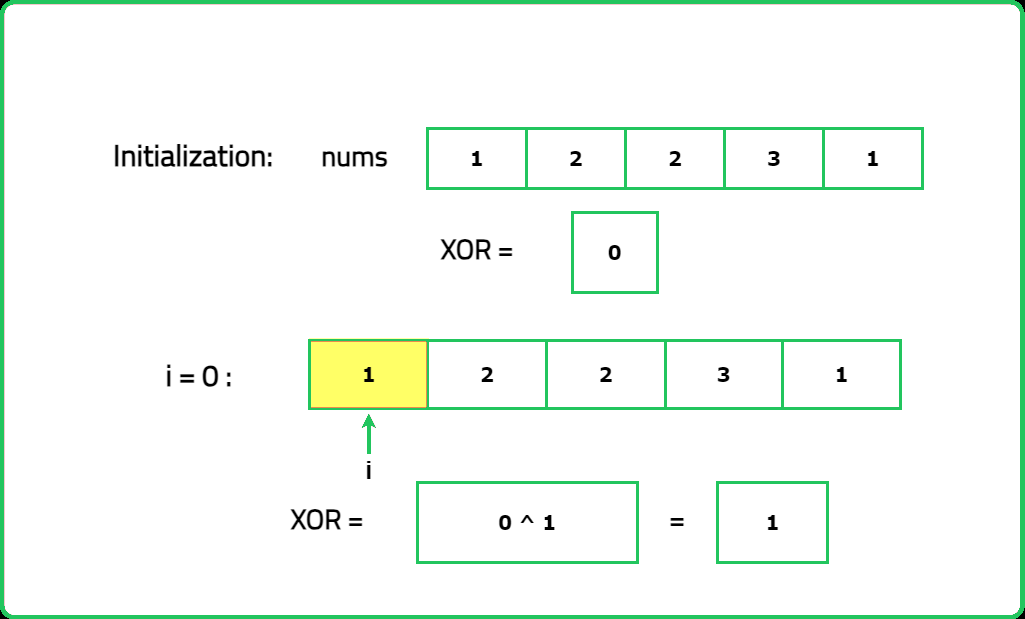
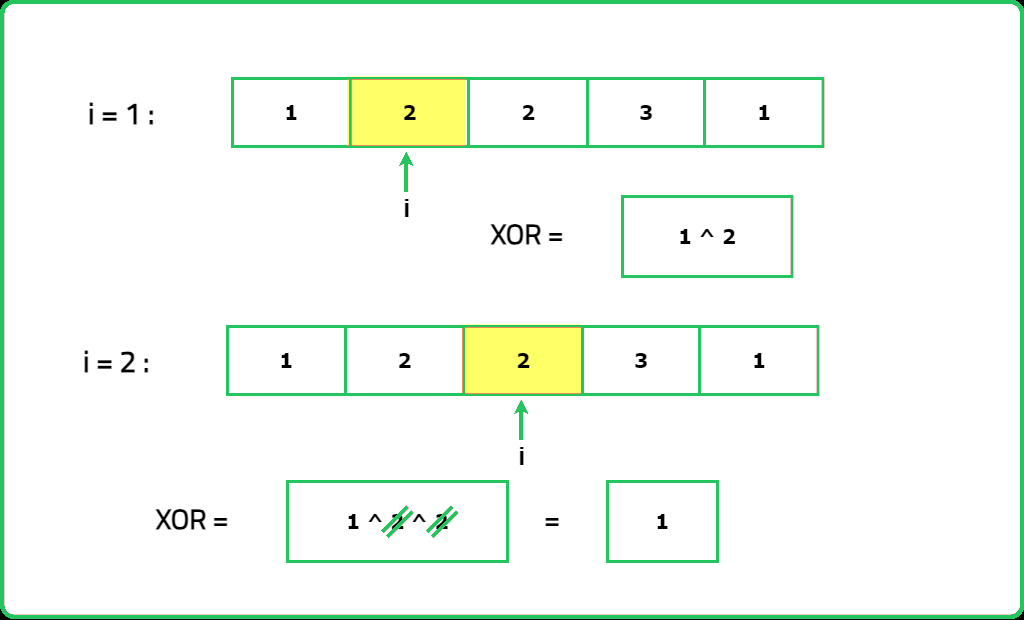
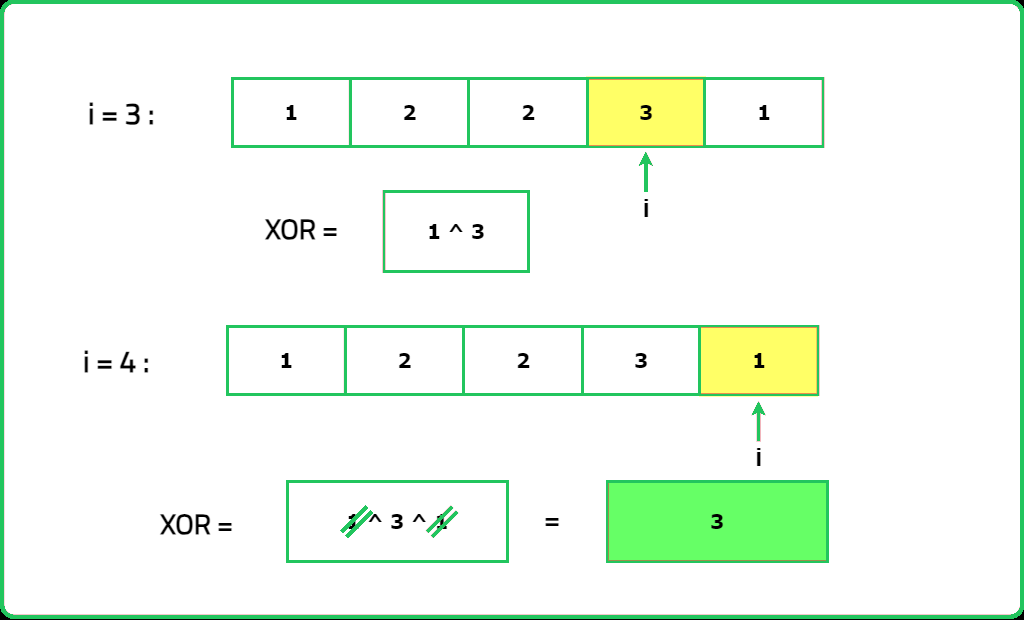
The problem can be efficiently solved using the properties of the XOR bitwise operator. The key properties of XOR are:


#include <bits/stdc++.h>
using namespace std;
class Solution {
public:
/* Function to get the single
number in the given array */
int singleNumber(vector<int>& nums){
/* Variable to store XOR
of all numbers in array */
int XOR = 0;
/* Iterate on the array to
find XOR of all elements */
for(int i = 0; i < nums.size(); i++) {
XOR ^= nums[i];
}
// XOR stores the required answer
return XOR;
}
};
int main() {
vector<int> nums = {1, 2, 2, 4, 3, 1, 4};
/* Creating an instance of
Solution class */
Solution sol;
/* Function call to get the single
number in the given array */
int ans = sol.singleNumber(nums);
cout << "The single number in given array is: " << ans;
return 0;
}
import java.util.*;
class Solution {
/* Function to get the single
number in the given array */
public int singleNumber(int[] nums) {
/* Variable to store XOR
of all numbers in array */
int XOR = 0;
/* Iterate on the array to
find XOR of all elements */
for (int i = 0; i < nums.length; i++) {
XOR ^= nums[i];
}
// XOR stores the required answer
return XOR;
}
}
public class Main {
public static void main(String[] args) {
int[] nums = {1, 2, 2, 4, 3, 1, 4};
/* Creating an instance of
Solution class */
Solution sol = new Solution();
/* Function call to get the single
number in the given array */
int ans = sol.singleNumber(nums);
System.out.println("The single number in given array is: " + ans);
}
}
class Solution:
# Function to get the single
# number in the given array
def singleNumber(self, nums):
# Variable to store XOR
# of all numbers in array
XOR = 0
# Iterate on the array to
# find XOR of all elements
for num in nums:
XOR ^= num
# XOR stores the required answer
return XOR
if __name__ == "__main__":
nums = [1, 2, 2, 4, 3, 1, 4]
# Creating an instance of
# Solution class
sol = Solution()
# Function call to get the single
# number in the given array
ans = sol.singleNumber(nums)
print(f"The single number in given array is: {ans}")class Solution {
/* Function to get the single
number in the given array */
singleNumber(nums) {
/* Variable to store XOR
of all numbers in array */
let XOR = 0;
/* Iterate on the array to
find XOR of all elements */
for (let i = 0; i < nums.length; i++) {
XOR ^= nums[i];
}
// XOR stores the required answer
return XOR;
}
}
const nums = [1, 2, 2, 4, 3, 1, 4];
/* Creating an instance of
Solution class */
const sol = new Solution();
/* Function call to get the single
number in the given array */
const ans = sol.singleNumber(nums);
console.log("The single number in given array is: " + ans);
Time Complexity: O(N) (where N is the size of array) – Traversing through the array once will result in O(N) TC.
Space Complexity: O(1) – Using constant space.
Q: Can I solve this without using XOR?
A: Yes, you can use a hash map to count the frequency of each number and return the one with a count of 1. However, this approach uses O(n) time but also requires O(n) space.
Q: Why does XOR work for this problem?
A: XOR cancels out duplicate numbers because a⊕a=0. When all numbers in the array are XORed, only the unique number remains, as 0⊕unique number=unique number.
Q: How would you extend this problem if the unique number appears k times instead of 1?
A: XOR alone wouldn’t work. Instead, you could use bitwise counting to count the occurrences of each bit across all numbers and find the unique number that appears k times.
Q: How would you modify the solution if there were exactly two unique numbers?
A: XOR all elements to get a⊕b (the XOR of the two unique numbers). Then, isolate a differing bit and use it to partition the numbers into two groups, each containing one unique number.
Your notes are automatically saved in your browser's local storage and will persist across sessions on this device.