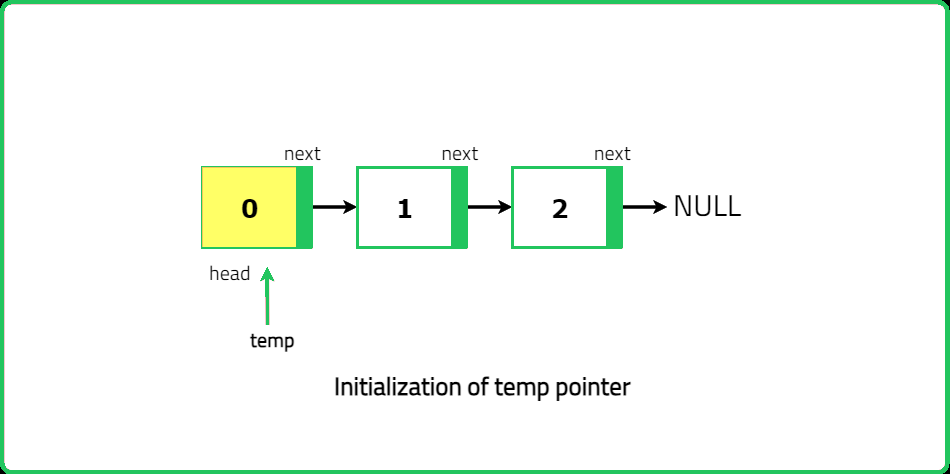
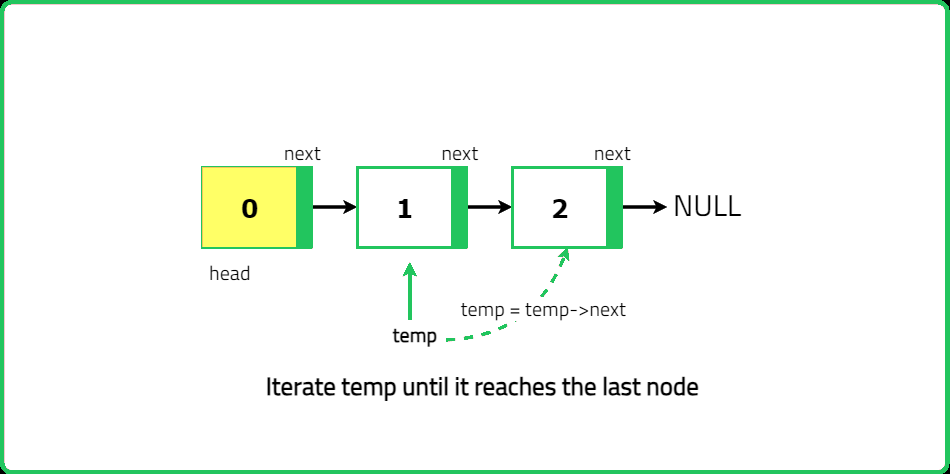
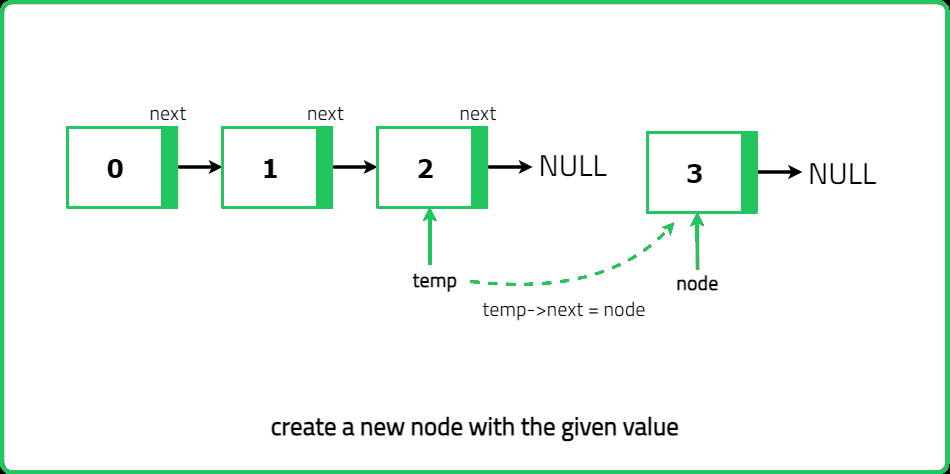
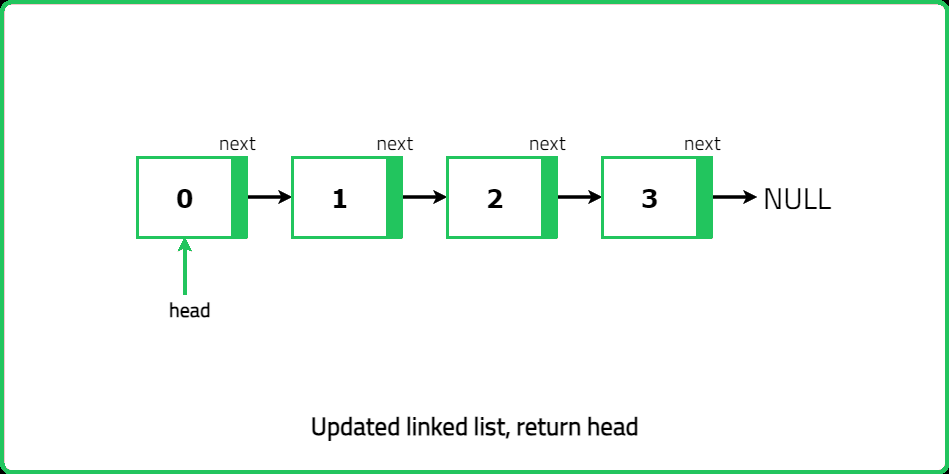
Given the head of a singly linked list and an integer X, insert a node with value X at the tail of the linked list and return the head of the modified list.
The tail is the last node of the linked list.
Input: head -> 1 -> 2 -> 3, X = 7
Output: head -> 1 -> 2 -> 3 -> 7
Explanation: 7 was added as the last node.
Input: head, X = 0
Output: head -> 0
Explanation: 0 was added as the last/only node.
Input: head -> 5 -> 6, X = 8
NULL.


#include <bits/stdc++.h>
using namespace std;
// Definition of singly linked list
struct ListNode
{
int val;
ListNode *next;
ListNode(int data1)
{
val = data1;
next = NULL;
}
ListNode(int data1, ListNode *next1)
{
val = data1;
next = next1;
}
};
// Solution class
class Solution {
public:
// Function to insert a new node at the tail of the linked list
ListNode* insertAtTail(ListNode* &head, int X) {
if (head == NULL)
return new ListNode(X);
ListNode* temp = head;
// Traversing until the last node
while (temp->next != NULL) {
temp = temp->next;
}
ListNode* newNode = new ListNode(X);
temp->next = newNode;
return head;
}
};
// Helper Function to print the linked list
void printLL(ListNode* head) {
while (head != NULL) {
cout << head->val << " ";
head = head->next;
}
cout << endl;
}
int main() {
// Create a linked list from a vector
vector<int> arr = {10, 20, 30};
int val = 40;
ListNode* head = new ListNode(arr[0]);
head->next = new ListNode(arr[1]);
head->next->next = new ListNode(arr[2]);
// Print the original list
cout << "Original List: ";
printLL(head);
// Create a Solution object
Solution sol;
head = sol.insertAtTail(head, val);
// Print the modified linked list
cout << "List after inserting the given value at the tail:";
printLL(head);
return 0;
}import java.util.*;
// Definition of singly linked list
class ListNode {
int val;
ListNode next;
ListNode(int data1) {
val = data1;
next = null;
}
ListNode(int data1, ListNode next1) {
val = data1;
next = next1;
}
}
// Solution class
class Solution {
// Function to insert a new node at the tail of the linked list
public ListNode insertAtTail(ListNode head, int X) {
if (head == null)
return new ListNode(X);
ListNode temp = head;
// Traversing until the last node
while (temp.next != null) {
temp = temp.next;
}
ListNode newNode = new ListNode(X);
temp.next = newNode;
return head;
}
}
// Main class
class Main {
// Helper Function to print the linked list
private static void printLL(ListNode head) {
while (head != null) {
System.out.print(head.val + " ");
head = head.next;
}
System.out.println();
}
public static void main(String[] args) {
// Create a linked list from an array
int[] arr = {10, 20, 30};
int val = 40;
ListNode head = new ListNode(arr[0]);
head.next = new ListNode(arr[1]);
head.next.next = new ListNode(arr[2]);
// Print the original list
System.out.print("Original List: ");
printLL(head);
// Create a Solution object
Solution sol = new Solution();
head = sol.insertAtTail(head, val);
// Print the modified linked list
System.out.print("List after inserting the given value at the tail: ");
printLL(head);
}
}# Definition of singly linked list
class ListNode:
def __init__(self, val=0, next=None):
self.val = val
self.next = next
class Solution:
# Function to insert a new node at the tail of the linked list
def insertAtTail(self, head, X):
if head is None:
return ListNode(X)
temp = head
# Traversing until the last node
while temp.next is not None:
temp = temp.next
newNode = ListNode(X)
temp.next = newNode
return head
# Helper Function to print the linked list
def printLL(head):
while head is not None:
print(head.val, end=" ")
head = head.next
print()
if __name__ == "__main__":
# Create a linked list from a list
arr = [10, 20, 30]
val = 40
head = ListNode(arr[0])
head.next = ListNode(arr[1])
head.next.next = ListNode(arr[2])
# Print the original list
print("Original List: ", end="")
printLL(head)
# Create a Solution object
sol = Solution()
head = sol.insertAtTail(head, val)
# Print the modified linked list
print("List after inserting the given value at the tail: ", end="")
printLL(head)// Definition of singly linked list
class ListNode {
constructor(val = 0, next = null) {
this.val = val;
this.next = next;
}
}
// Solution class
class Solution {
// Function to insert a new node at the tail of the linked list
insertAtTail(head, X) {
if (head === null)
return new ListNode(X);
let temp = head;
// Traversing until the last node
while (temp.next !== null) {
temp = temp.next;
}
let newNode = new ListNode(X);
temp.next = newNode;
return head;
}
}
// Helper Function to print the linked list
function printLL(head) {
let current = head;
while (current !== null) {
process.stdout.write(current.val + " ");
current = current.next;
}
console.log();
}
// Main function
let arr = [10, 20, 30];
let val = 40;
let head = new ListNode(arr[0]);
head.next = new ListNode(arr[1]);
head.next.next = new ListNode(arr[2]);
// Print the original list
console.log("Original List: ");
printLL(head);
// Create a Solution object
let sol = new Solution();
head = sol.insertAtTail(head, val);
// Print the modified linked list
console.log("List after inserting the given value at the tail:");
printLL(head);Q: What is the difference between inserting at the tail and other positions?
A: Inserting at the tail requires traversal to the end of the list (unless the tail is tracked separately), while inserting at other positions might require locating a specific index or node.
Q: How do you ensure the new node is added at the correct position?
A: By traversing the list until the tail (node with next = None) is found and updating its next pointer to point to the new node.
Q: What if you frequently need to insert at the tail?
A: Maintain a direct reference to the tail node, allowing O(1) insertion without requiring traversal.
Q: What if the list needs to remain sorted after insertion?
A: Traverse the list to find the correct position based on X’s value, and insert the new node at that position.
Your notes are automatically saved in your browser's local storage and will persist across sessions on this device.